There’s a particular kind of frustration that comes with living in a house that almost works. The location is right, the street feels familiar, the neighbours are decent, and you can already picture staying there long term, but the house itself keeps getting in the way. Maybe the layout is awkward, the rooms are too dark, the kitchen belongs to another decade, or every improvement seems to reveal another problem hiding behind the walls.
That’s when homeowners often start comparing knock down rebuild vs renovation, because the decision is rarely as simple as “fix what’s there” or “start from scratch.” Both options can make sense, but they suit different properties, budgets, timelines, and levels of patience.
Renovating can be the right move when the bones are good
A renovation can be a smart choice when the existing home has a solid structure, a workable layout, and enough character worth preserving. If you love the original features, only need to update certain areas, or want to improve the home gradually, renovation may give you the flexibility you need without completely clearing the block.
It can also be appealing when planning restrictions, neighbourhood character, or sentimental value make a full rebuild less attractive. Some homes deserve to be worked with rather than erased, especially if their charm would be difficult or expensive to recreate.
The challenge is that renovation can become unpredictable once the work begins. Older homes may hide plumbing issues, electrical problems, asbestos, uneven floors, structural surprises, or previous DIY fixes that turn a simple upgrade into a bigger job. That doesn’t mean renovation is a bad idea, but it does mean you need realistic expectations and a buffer for the unknown.
Rebuilding gives you a cleaner starting point
A knock down rebuild can make sense when the existing house is too compromised, too small, too inefficient, or too poorly laid out to justify major renovation costs. Instead of spending money trying to force an old home to meet modern needs, you clear the site and design something that suits the way you actually live.
That can be especially useful if you want open living areas, better natural light, improved energy efficiency, more bedrooms, a home office, better storage, or a stronger connection to the backyard. Starting again gives you more control over the floorplan and fewer compromises caused by the existing structure.
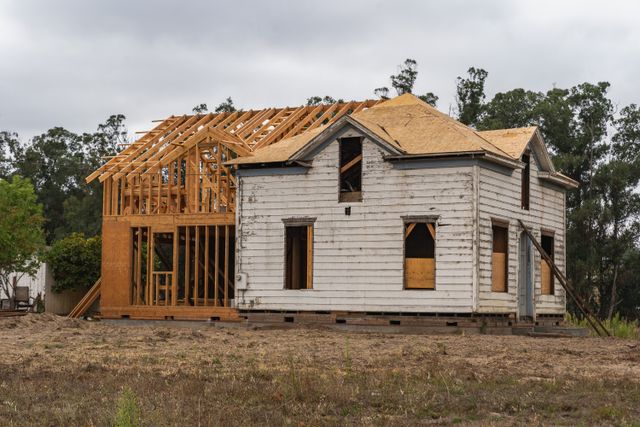
Of course, rebuilding is still a major project. There are demolition costs, approvals, design decisions, temporary accommodation, site conditions, and construction timelines to consider. The process may be more straightforward in some ways than renovating, but it still requires careful planning.
The block itself can influence the answer
Sometimes the most valuable part of a property is not the house, but the land underneath it. If you love the location and the block has good orientation, access, space, or views, rebuilding can let you keep what works while replacing what doesn’t. On the other hand, if the existing home already makes good use of the block, a thoughtful renovation may be enough to unlock its potential.
The best choice is the one that solves the real problem
Before deciding, it helps to ask what you’re actually trying to fix. Is the home too small, too dark, too inefficient, too outdated, or simply not suited to your lifestyle anymore? If the issues are mostly cosmetic, renovation may be enough. If the problems are structural or baked into the layout, rebuilding may offer better long-term value.
Either way, the goal is the same: creating a home that fits your life properly, rather than constantly working around one that almost does.