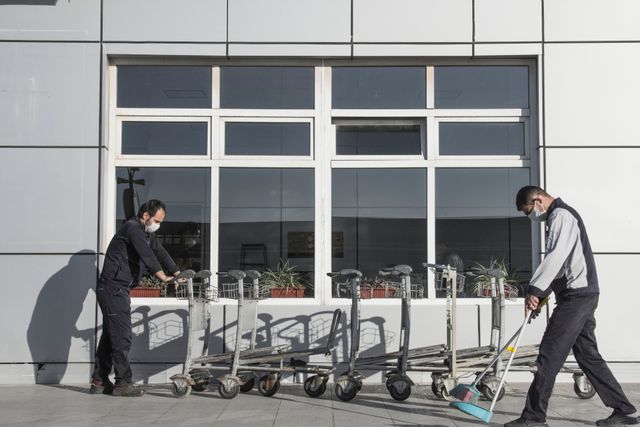
Body-stressing injuries are the number one cause of serious workers’ comp claims in Australia, and health care is one of the sectors where the risk of manual handling is especially high. Safe Work Australia highlights repetitive load carrying, awkward postures and forceful movements as the main ways that healthcare staff get hurt, especially when working in health care and social assistance. These aren’t just abstract risks, they’re the daily reality of clinical, aged care and community health work, something you see every day when you walk into a hospital or care home.
Training can help a bit, but so can the right equipment. A well-designed folding trolley can make it so a healthcare worker doesn’t even have to carry a load at all for a lot of the jobs where carrying has just become the norm.
What Manual Handling Looks Like in Real Life?
The reality of manual handling in a clinical environment is a bit different from what you might think. From the outside, it looks like a nurse just doing their job, moving supplies around, but the truth is they’re doing this dozens of times over a 12-hour shift, and that adds up. Aged care workers carry heavy equipment, linen and food between units in a care home all day without even thinking about it. Community health workers lug supplies upstairs, round corners and over carpets to get to a client’s place.
It’s not like they’re doing one heavy lift & then just stopping, either it’s a pattern of repeated strain that comes together over a career to cause long-term musculoskeletal problems. The injury doesn’t just show up one day, it shows up in the staff taking more and more sick leave, doing less and less work, and eventually just leaving the job because they can’t keep doing it.
What Healthcare Environments Really Need?
A carrying solution for a clinical environment needs to be able to do a few things that a standard trolley often can’t. For one thing, it needs to be able to fit through the standard width of a hospital corridor or care home, if it can’t, well it’s not going to do the job. And on top of that, it needs to be easy to clean so it can handle the high level of hygiene in a clinical setting. A trolley that’s smooth and non-porous won’t harbour germs and will be a lot easier to keep clean.
Load flexibility is also important, being able to carry a load across two levels means a worker can do a whole lot more in a single trip, rather than having to make multiple trips to get everything done. And a foot brake that works on any kind of floor is just basic, preventing the cart from rolling off down the hill takes a lot of stress off the worker. These aren’t fancy specs, they’re the bare minimum for a tool that workers are going to use every day.
Financial Rationale for Injury Prevention Handling Equipment
The financial cost of an injury from manual handling goes far beyond the initial workers’ compensation claim in Australia’s health care sector. Restricted duties make the employee less productive while the facility still must pay for the restricted duty employee as well as any replacement worker who takes over the job. Chronic musculoskeletal problems that arise over time result in diminished capacity and attrition among employees in an industry that struggles with recruitment and retention.
Injury prevention equipment that costs a few hundred dollars will pay for itself within the first month if it prevents just one serious claim. For an entire ward, clinic or community health team utilising such injury prevention equipment, the overall value is considerable. The case for the equipment investment is not a welfare argument but an operational cost one that can be quantified.
Community Health Considerations
Nurses, allied health workers and NDIS workers in the community sector find themselves in a less controllable environment and facing a much greater variety of manual handling tasks compared to a fixed site clinic. They must carry the equipment from the vehicle upstairs, through elevators and tight passages and through the uncontrolled environment of the patient’s home. An equipment trolley that folds into backpack form easily stores in the vehicle trunk without needing to change anything about the vehicle.
Rubber tyres that will roll on driveway pavement, tile floors and light carpeting with no difficulty or problems. Push-button folding system operated by one hand allows an operator using the other hand to handle an item or open a door. Sixty kilograms of loading in two levels will handle clinical supply loads that cannot be handled in one trip by a single-tiered trolley.
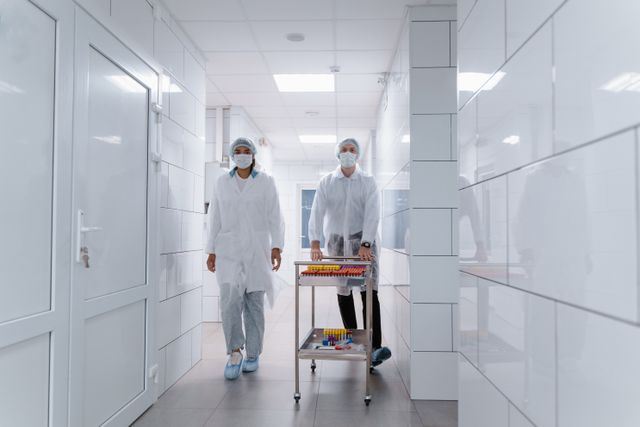
Design Integrity in a Professional Setting
Equipment that breaks down during shift is a whole other matter than equipment that never made it onto the shift. A fold that won’t fold, wheels that shear off or brakes that don’t lock add wasted effort, create a second risk factor and produce the very frustration that results in the equipment being parked in the nurses’ station rather than being used on the floor.
Structural integrity through repeated cycles of load is exactly what the folding trolley needs. A well-designed folding trolley constructed of aluminium, fitted with a dependable push-button system and backed by a warranty showing faith in the design is not an expensive solution in the healthcare setting. It’s the only design solution possible.