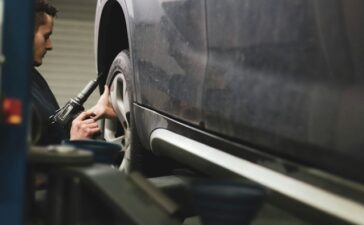
Mobile tradesmen and home-based service providers typically employ the family car for business purposes before acquiring a van. Putting up a sign on a personal vehicle could be one of the first investments made when starting up a small business. A professionally designed vehicle makes an impression when a customer sees it at their house. The question is which form of signage to use on the car that you also drive with your family on the weekends.
Three Forms of Signage for a Car You Also Drive On Weekends
There are three major forms of car signage Melbourne for a car that one uses both for business and leisure. Magnetic panels could be easily detached, making them suitable for those who only use a personal vehicle for business a few times a week. Vinyl decals will last longer and typically provide a nicer finish, however, removing them will require more effort. Partial wraps are somewhere in the middle of the road and include covering parts of the car like a door or rear panel with a printed film. There is a trade-off in each option that one should consider depending on the frequency of using the car for business purposes and whether it is also used to transport a family. Curved body panels could distort a design due to stretching of the vinyl.
UV Radiation Is Harsher For The Car Than People Think
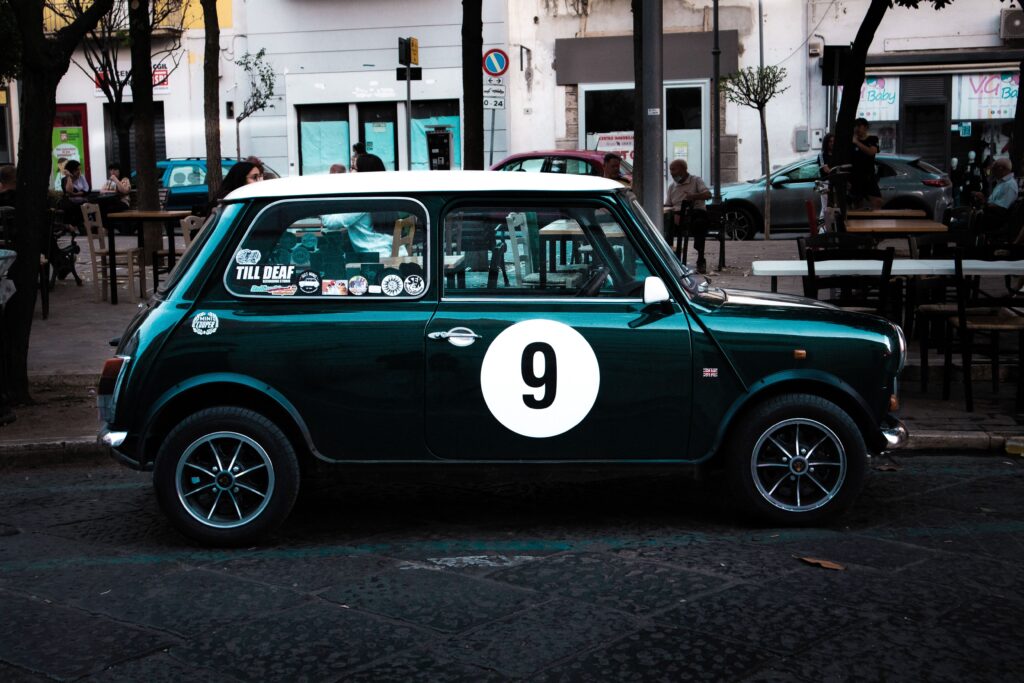
ARPANSA, the Australian radiation protection and nuclear safety authority, states that UV radiation is still reaching the Earth’s surface even when it is cool or overcast. The Bureau of Meteorology has a UV scale for Melbourne ranging from low to extreme, with a number 11 or above considered extreme. These recommendations take into account human exposure, not the paint of a car. However, since vehicles are usually exposed to the sun regardless of where they are parked, one could assume similar exposure for cars. It should be noted that where a car is parked also matters as the garage provides significantly less exposure. Films and magnetic signs are usually manufactured by companies, therefore one could request some information on the lifespan of their products.
Designing A Car Sign To Fit A Small Canvas
A car door is a whole lot tighter than a van side, so every word has to pull its weight. For most traders, a business name, a short description of what they do and a phone number are all that’s needed. What really matters is that the writing stands out, clear contrast beats clever writing any day. And as for colour, dark lettering on a pale background will still be readable even when the car’s in the shade, getting blasted with glare or trundling through the rain. Bear in mind that QR codes only work if the page they open loads quickly on a phone, so don’t risk it if you’re not sure. Anyone who needs to slap their licence number on the side of their van should make sure they’ve checked the rules with their industry body before signing off on the design.
Quotes for car signs usually split the costs between design, production and fitting, asking for each one separately so you can get a straight comparison. And, as a sanity check, get your supplier to put a proof over a photo of your actual car so you don’t end up with any problems with door handles, curves or fuel flaps.
Colour Changing Is A Different Ball Game
If you’re thinking of doing partial signage, or undergoing a full colour change and wrap, you need to know that’s a whole different story. A full colour change for your vehicle could cause issues with registration that have been sorted out by VicRoads, you can give them a jingle on 13 11 71 to get the lowdown. Now, magnetic signs and stickers on the door panels won’t mess with the factory colour. But window films are a different kettle of fish, governed by their own rules, such as the fact that they’ve got to be less than 10% reflective.
Resale, Removal & Leaving The Sides Of Your Car Looking Pristine
How easy or otherwise it is to get the vinyl sign off without mucking up the paint will depend on the film itself, how rough the paint is in the first place and how long the sign has been hanging around the sun. Usually, the owners are worried about how old the paint is and the dreaded ‘ghosting’, where the paint underneath the sign has gone a funny colour compared to the rest of the car.
A Quick Word On Tax
The ATO has set the rate for business travel at 91 cents per kilometre for 2026-27, compared to 88 cents the year before. This takes into account all the running costs of your car, including depreciation, but you can only claim it for up to 5,000 business kilometres per car. If you need to log more than that, you’ve got to get out the logbook and keep up with the ATO’s rules.
Vehicle signage doesn’t change this, all it does is make your car look snazzy. Any mileage you reckon was for business won’t get counted just because the sign says so, and you’ll need to get an ATO-registered agent to tell you what you should be doing. How often you use the car for work should be the deciding factor on whether to get a sign, not how good the mock-up looks. Do ask about durability before you commit, get a proof using a photo of the actual vehicle and keep a snap of it when it gets fitted.